Thursday, 19 February 2009
Hello there!
Sorry I've not posted in a while - other projects have taken my focus away. There's loads of stuff archived, though, so have a poke around. It's not like they're going out of date (except the parts that are).

Wednesday, 5 November 2008
WRONG: Chuck Yeager was the first man to break the sound barrier
In 1947, the 24-year-old test pilot Chalmers “Slick” Godlin didn’t become the first pilot to break the sound barrier. Though slated to be the first in the field, he – not unreasonably – wanted $150,000 in hazard pay from the Bell Aircraft Corporation if he was going to travel at 800 mph in a plane that had every chance of falling apart in mid-air. The US government took over the project instead and gave the job to Chuck Yeager, who, at regular US Air Force pay, came a lot cheaper than Godlin.
There is evidence, however, to show that another pilot, George Welch, broke the sound barrier a couple of weeks before Yeager. Flying an F-86 at the same air base as Yeager’s experimental X-1, Welch was under strict instructions not to break the sound barrier in his aircraft before the X-1. He dived from 35,000 feet, however, and ground crews reported hearing a sonic boom. As it was in a gravity-assisted dive, rather than on the level, Yeager is in the record books and Welch is forgotten.
In 1964, NASA and the Federal Aviation Authority decided to further their knowledge of sonic booms by conducting a series of tests in Oklahoma called – honestly – Operation Bongo II. Specifically, they generated eight sonic booms a day, beginning at 7am, for a period of six months. Five years and 15,000 complaints later, the government lost a class action lawsuit brought by the people of Oklahoma City.
If you’re a dominatrix or a cowboy, or are close friends with one, you’ve probably experienced a sonic boom for yourself, albeit at a small scale – the crack of a whip is caused by the tip moving at supersonic speed.
There is evidence, however, to show that another pilot, George Welch, broke the sound barrier a couple of weeks before Yeager. Flying an F-86 at the same air base as Yeager’s experimental X-1, Welch was under strict instructions not to break the sound barrier in his aircraft before the X-1. He dived from 35,000 feet, however, and ground crews reported hearing a sonic boom. As it was in a gravity-assisted dive, rather than on the level, Yeager is in the record books and Welch is forgotten.
In 1964, NASA and the Federal Aviation Authority decided to further their knowledge of sonic booms by conducting a series of tests in Oklahoma called – honestly – Operation Bongo II. Specifically, they generated eight sonic booms a day, beginning at 7am, for a period of six months. Five years and 15,000 complaints later, the government lost a class action lawsuit brought by the people of Oklahoma City.
If you’re a dominatrix or a cowboy, or are close friends with one, you’ve probably experienced a sonic boom for yourself, albeit at a small scale – the crack of a whip is caused by the tip moving at supersonic speed.
Monday, 27 October 2008
WRONG: Red, blue and yellow are the primary colours
At school, you were probably taught in art classes that the primary colours – the ones you use to mix all other colours – were red, blue and yellow. Sorry to break this to you, but your teacher wasn’t telling the truth.
Primary colours, the building-block hues, aren’t a property of light itself but a consequence of the way our eyes work. Cells in the retina respond to red, green and blue; accordingly, everything we can see is made up of combinations of red, green and blue light. (Some animals have a fourth type of cell that gives them a fourth primary colour, probably close to the ultraviolet range. Bees can’t see red, but they can see “bee purple”, which isn’t purple at all, but a combination of yellow and ultra-violet. All this begs the question of why bees don’t attend more raves.)
TVs work on this principle. Shine a red light and a green light together, for example, and you’ll see yellow where they overlap. Add blue and you’ll get white where all three combine.
So much for light. Now back to art lessons, or the “subtractive” system of colour mixing. In the subtractive system, you don’t add light to make new colours, but start with white then filter it. White light bouncing off red paint appears red because all other wavelengths have been absorbed by the paint. That’s why black surfaces get hot in the sun, because they absorb much of the light, then transmit some of that energy as heat.
Mix two paints together and the effect will always be darker than its constituents, because even fewer wavelengths will make it through the double filter. The three primary colours of the subtractive system (the “primary pigments”) are cyan, magenta and yellow (ie they are colours that can’t be made by mixing other colours, and together make up all other colours). Add cyan to magenta and you get blue. Magenta and yellow make red, and yellow and cyan make green. Most “full-colour” printing is composed of four translucent layers – C, M, Y and K (black). The K layer is only necessary because so much of the average page is type and because no one’s yet synthesised perfect primary inks.
The only reason Miss Johnson gave you red and blue with your yellow paints in art class was that they’re a lot cheaper to produce than cyan and magenta, and while it seems obvious that red and yellow should make orange, it’s less immediately apparent that magenta and yellow will make red.
Primary colours, the building-block hues, aren’t a property of light itself but a consequence of the way our eyes work. Cells in the retina respond to red, green and blue; accordingly, everything we can see is made up of combinations of red, green and blue light. (Some animals have a fourth type of cell that gives them a fourth primary colour, probably close to the ultraviolet range. Bees can’t see red, but they can see “bee purple”, which isn’t purple at all, but a combination of yellow and ultra-violet. All this begs the question of why bees don’t attend more raves.)
TVs work on this principle. Shine a red light and a green light together, for example, and you’ll see yellow where they overlap. Add blue and you’ll get white where all three combine.
So much for light. Now back to art lessons, or the “subtractive” system of colour mixing. In the subtractive system, you don’t add light to make new colours, but start with white then filter it. White light bouncing off red paint appears red because all other wavelengths have been absorbed by the paint. That’s why black surfaces get hot in the sun, because they absorb much of the light, then transmit some of that energy as heat.
Mix two paints together and the effect will always be darker than its constituents, because even fewer wavelengths will make it through the double filter. The three primary colours of the subtractive system (the “primary pigments”) are cyan, magenta and yellow (ie they are colours that can’t be made by mixing other colours, and together make up all other colours). Add cyan to magenta and you get blue. Magenta and yellow make red, and yellow and cyan make green. Most “full-colour” printing is composed of four translucent layers – C, M, Y and K (black). The K layer is only necessary because so much of the average page is type and because no one’s yet synthesised perfect primary inks.
The only reason Miss Johnson gave you red and blue with your yellow paints in art class was that they’re a lot cheaper to produce than cyan and magenta, and while it seems obvious that red and yellow should make orange, it’s less immediately apparent that magenta and yellow will make red.
Wednesday, 22 October 2008
WRONG: Judges have to wear wigs and gowns
Court dress, like all aspects of the law, is governed by ancient and complicated traditions. In the case of wigs and gowns, it dates back to the 17th century, when every gentlemen worth the name owned enough wigs and face-paint to shame a transvestite. The make-up, based on toxic lead oxide, actually caused hair loss, making wigs as much a necessity as a fashion statement. A wealthy nobleman wouldn’t have been seen dead without his Full-Bottomed periwig or a dildo (don’t get excited, a “dildo” was the name for a curly, detachable pigtail).
The rules for what judges should wear were codified officially in the Judges’ Rules of 1635.
According to Thomas Woodcock in his exhaustive history Legal Habits, the fashion for wigs was dying out in other professions by the 19th century, but the Full-Bottomed and Tie wigs remained in use by judges and barristers respectively (in England and Wales – the uniform and general legal tradition are slightly different in Scotland). The law moves very slowly, and is, by nature, conservative; one 19th-century judge, according to Woodcock, refused to recognise his own son at the bar because he was wearing a new style of wig.
Small alterations to the dress code have been introduced by daring judges over the years since the Rules were published, but more substantial changes only took place on the creation of new courts, such when the Courts of Chancery, the Admiralty, Probate and Matrimonial Causes were combined to form the High Court in 1873-5[2]. Even then, the changes tended to affect only the colour and cut of gown.
Today, judges are not, in fact, obliged to wear the wig and gown. In hot weather, or when children are on trial or acting as witnesses (and are likely to be intimidated), court dress may be dispensed with at the judge’s discretion.
The Lord Chancellor commissioned a report on the possibility of radically changing court dress in 2003[3], but its findings were not acted upon. It seems the gravitas conveyed by the historical costume (embodying as it does centuries of tradition) aren’t considered worth sacrificing simply for modernisation’s sake. All societies make a distinction between “sacred” and “profane” contexts, with costume historically acting as a key indication of the difference between the two. If you doubt its significance, ask yourself this: does the Pope wear a funny hat?
The rules for what judges should wear were codified officially in the Judges’ Rules of 1635.
According to Thomas Woodcock in his exhaustive history Legal Habits, the fashion for wigs was dying out in other professions by the 19th century, but the Full-Bottomed and Tie wigs remained in use by judges and barristers respectively (in England and Wales – the uniform and general legal tradition are slightly different in Scotland). The law moves very slowly, and is, by nature, conservative; one 19th-century judge, according to Woodcock, refused to recognise his own son at the bar because he was wearing a new style of wig.
Small alterations to the dress code have been introduced by daring judges over the years since the Rules were published, but more substantial changes only took place on the creation of new courts, such when the Courts of Chancery, the Admiralty, Probate and Matrimonial Causes were combined to form the High Court in 1873-5[2]. Even then, the changes tended to affect only the colour and cut of gown.
Today, judges are not, in fact, obliged to wear the wig and gown. In hot weather, or when children are on trial or acting as witnesses (and are likely to be intimidated), court dress may be dispensed with at the judge’s discretion.
The Lord Chancellor commissioned a report on the possibility of radically changing court dress in 2003[3], but its findings were not acted upon. It seems the gravitas conveyed by the historical costume (embodying as it does centuries of tradition) aren’t considered worth sacrificing simply for modernisation’s sake. All societies make a distinction between “sacred” and “profane” contexts, with costume historically acting as a key indication of the difference between the two. If you doubt its significance, ask yourself this: does the Pope wear a funny hat?
Thursday, 16 October 2008
WRONG: Germany started World War One
Germany didn’t start the war, and despite what Baldrick would have you believe, neither did it begin when a bloke called Archie Duke shot an ostrich because he was hungry.
Europe in the early part of the 20th century was a good time for factions: communism, anarcho-syndicalism and a festival of less-popular -isms were battling for the support of the masses while, at the other end of the social scale, the competing imperial monarchies flexed their impressive moustaches in Africa and Asia. It was a family affair – Kaiser Wilhelm II of Germany, Czar Nicholas II of Russia and King George V of the United Kingdom were all Queen Victoria’s grandchildren, as were the wives of five other crowned heads of Europe (*Sweden, Spain, Romania, Greece and Norway).
An unfortunate side effect of the struggle was an arms race, as no one nation could afford to get left behind. Germany and France were already at loggerheads over who owned the Alsace-Lorraine borderlands and Turkey and Russia were grumbling at each other across the Balkans.
As it was, the spark for this powder keg was provided by one of the century’s clumsiest assassination attempts. A gang of Serbian nationalists, probably associated with a terrorist group called the Black Hand, resented Austria-Hungary’s influence on their side of the border and hatched a plan to blow up the Arch-Duke Franz Ferdinand (Uniquely in history, he inspired both a global war and a well-tailored indie band.) during a state visit to Sarajevo. The first conspirator chickened out as the motorcade passed by. The second threw a bomb, which missed. In the ensuing panic, the other five failed to do anything at all.
That would have been that, except that Franz Ferdinand decided later to visit the blast casualties in hospital, and his driver, unaware of a change in plans, happened to take a wrong turn. As he backed up to return to the official route, he passed the seventh member of the conspiracy, Gavrilo Princip, who had gone to get his lunch. Presumably unable to believe his luck, the 19-year-old Princip shot Franz Ferdinand and his wife five times. Too young to be executed, he was imprisoned for life but died of TB in 1918.
To cut a long story short, Austria-Hungary bullishly used the assassination as an excuse to invade Serbia. Russia unexpectedly declared war against Austria-Hungary in support of Serbia. Germany had already agreed to side with Austria-Hungary, so declared war on Russia. France came out in support of Russia, so Germany declared war on them too.
Here’s where it gets really stupid. To get to France, Germany had to go through Belgium. The Belgians refused permission, but Germany ploughed through anyway, and that’s where Britain – to Germany’s surprise – got involved, thanks to a 75-year-old treaty designed to protect Belgium’s independence. The Turks (the Ottoman Empire) joined the Germans, the Italians joined the Allies in 1915 and Bulgaria joined the Austro-Hungarians. Even America stuck its oar in towards the end. Some 15 million deaths later, the Germans (and the Austro-Hungarians, etc) lost.
Europe in the early part of the 20th century was a good time for factions: communism, anarcho-syndicalism and a festival of less-popular -isms were battling for the support of the masses while, at the other end of the social scale, the competing imperial monarchies flexed their impressive moustaches in Africa and Asia. It was a family affair – Kaiser Wilhelm II of Germany, Czar Nicholas II of Russia and King George V of the United Kingdom were all Queen Victoria’s grandchildren, as were the wives of five other crowned heads of Europe (*Sweden, Spain, Romania, Greece and Norway).
An unfortunate side effect of the struggle was an arms race, as no one nation could afford to get left behind. Germany and France were already at loggerheads over who owned the Alsace-Lorraine borderlands and Turkey and Russia were grumbling at each other across the Balkans.
As it was, the spark for this powder keg was provided by one of the century’s clumsiest assassination attempts. A gang of Serbian nationalists, probably associated with a terrorist group called the Black Hand, resented Austria-Hungary’s influence on their side of the border and hatched a plan to blow up the Arch-Duke Franz Ferdinand (Uniquely in history, he inspired both a global war and a well-tailored indie band.) during a state visit to Sarajevo. The first conspirator chickened out as the motorcade passed by. The second threw a bomb, which missed. In the ensuing panic, the other five failed to do anything at all.
That would have been that, except that Franz Ferdinand decided later to visit the blast casualties in hospital, and his driver, unaware of a change in plans, happened to take a wrong turn. As he backed up to return to the official route, he passed the seventh member of the conspiracy, Gavrilo Princip, who had gone to get his lunch. Presumably unable to believe his luck, the 19-year-old Princip shot Franz Ferdinand and his wife five times. Too young to be executed, he was imprisoned for life but died of TB in 1918.
To cut a long story short, Austria-Hungary bullishly used the assassination as an excuse to invade Serbia. Russia unexpectedly declared war against Austria-Hungary in support of Serbia. Germany had already agreed to side with Austria-Hungary, so declared war on Russia. France came out in support of Russia, so Germany declared war on them too.
Here’s where it gets really stupid. To get to France, Germany had to go through Belgium. The Belgians refused permission, but Germany ploughed through anyway, and that’s where Britain – to Germany’s surprise – got involved, thanks to a 75-year-old treaty designed to protect Belgium’s independence. The Turks (the Ottoman Empire) joined the Germans, the Italians joined the Allies in 1915 and Bulgaria joined the Austro-Hungarians. Even America stuck its oar in towards the end. Some 15 million deaths later, the Germans (and the Austro-Hungarians, etc) lost.
Monday, 6 October 2008
WRONG: Free speech is protected in the UK
Even in America, where the First Amendment is so well known it’s practically a celebrity, freedom of speech is limited. You may not directly incite the overthrow of the government, for example, though talking in broad terms about how a hypothetical revolution might, sort of, be a good thing, is okay.
In Britain, Article 10 of the European Convention on Human Rights (enshrined in domestic law as the Human Rights Act of 1998) protects “the right to freedom of expression”. However, the less-well-quoted second paragraph adds a series of get-out clauses regarding national security, public health and safety, crime, defamation, confidentiality and judicial impartiality. In other words, free speech is not free. Speech costs, and right here’s where you start paying.
Defamation is perhaps the harshest restriction. Those accused of it in the UK are, in a sense, guilty till proven innocent. The burden of proof is on the defendant. If you’re accused of defamation – and it’s not in question that you said what they say you said – you have to prove that what you said was not defamatory. There are four grounds for this:
1. What you said was true. Eg, Jeffrey Archer is a liar. (He was convicted of perjury, therefore he is uncontestably a liar.)
2. It was “fair comment”, or, in other words, merely an opinion. But to be fair comment, a jury must agree that it is responsible, constructive and informed. They must also determine that it was not made with malice. Eg, Jeffrey Archer is not a suitable candidate for the priesthood.
3. It was in the interest of the public (as opposed to being of interest to the public) and not motivated by malice. Traditionally the case for public interest has been hard to make, but would typically involve a cabinet minister doing something unethical.
4. It was said by a peer or MP in the Houses of Parliament in the course of parliamentary proceedings, or under oath by a witness in a court of law. Additionally, a third party reporting neutrally from either of those places may repeat the claims without being guilty of defamation. Neutral reporting is not necessarily a defence in other circumstances. Saying “According to Fred Bloggs, Jeffrey Archer is a bag of shit” is just as defamatory as Fred Bloggs’ original statement. So is “Allegedly, Jeffrey Archer is a bag of shit”. The only reason newspapers get away with playing the “allegedly” card is that it’s not usually worth the plaintiff’s time and effort pursuing in court everyone who repeats an allegation after the first instance.
Unless, of course, the original statement was made by someone with no funds, but repeated by a newspaper or magazine with deep pockets and a weak case.
Another exception to the freedom of speech is the legislation concerning incitement to racial and religious hatred – in the words of the Act, you may not “stir up hatred” against anyone on racial or religious grounds. But how do you define a religion or a race? And what, precisely, constitutes “stirring up”? Is it illegal to say, “I think everyone should hate Aum Shinrikyo members”, bearing in mind that fair comment is not a defence for incitement to religious hatred? (Aum Shinrikyo is the Japanese cult behind the sarin gas attacks on the Tokyo underground)
What about, “I applaud anyone willing to slap a Norwegian”?
There are many more examples of “unfree” speech:
• Perjury: you cannot lie under oath in court. Well, you can, but you’re leaving yourself open to arrest. (Jeffrey.)
• Similarly, you can’t give a judge backchat or talk out of turn, or you’ll risk being in contempt of court.
• Judges can restrict court reporting. Some cases in Family Court or involving national security are heard in camera (ie privately), and the press may not report the names of rape or blackmail victims. The press may also be subject to a temporary ban on reporting certain proceedings, such as committals, at which a magistrate decides whether there is enough evidence for a jury trial.
• You can’t plagiarise someone or otherwise infringe their copyright, though you may quote someone else’s material in a published work within legally proscribed limits.
• Technically, you can’t blaspheme against the god of the Church Of England, though recently courts have tended to leave it to Him to punish transgressors.
• You can’t make a protest within a kilometre of Parliament without a permit.
• You can’t lie about your products in advertising material.
• Breach of confidence is illegal – you may not, for example, tell anyone about your time working as Jade Goody’s personal nutritionist if your contract with her expressly forbade telling tales.
As a postscript, please don’t slap Norwegians, they’re a lovely bunch of people. Except the black metal band Mayhem. Before they even released their first album, the singer, Dead, had lived up to his name by committing suicide and the bassist Count Grishnackh had killed the guitarist Euronymous by stabbing him 24 times. The replacement guitarist, Blasphemer, later fired the replacement singer Attila (his real name, somewhat improbably) by kicking him down the stairs and smashing his head twice into a wall. The second replacement singer, Maniac, accidentally fractured a fan’s skull when he threw a severed sheep’s skull into the audience. Drummer Hellhammer, meanwhile, is the reliable band member: when not on tour he works as a night watchman in a mental hospital. Snaps to Chris Campion of The Observer for digging up the details of this story. So to speak.
In Britain, Article 10 of the European Convention on Human Rights (enshrined in domestic law as the Human Rights Act of 1998) protects “the right to freedom of expression”. However, the less-well-quoted second paragraph adds a series of get-out clauses regarding national security, public health and safety, crime, defamation, confidentiality and judicial impartiality. In other words, free speech is not free. Speech costs, and right here’s where you start paying.
Defamation is perhaps the harshest restriction. Those accused of it in the UK are, in a sense, guilty till proven innocent. The burden of proof is on the defendant. If you’re accused of defamation – and it’s not in question that you said what they say you said – you have to prove that what you said was not defamatory. There are four grounds for this:
1. What you said was true. Eg, Jeffrey Archer is a liar. (He was convicted of perjury, therefore he is uncontestably a liar.)
2. It was “fair comment”, or, in other words, merely an opinion. But to be fair comment, a jury must agree that it is responsible, constructive and informed. They must also determine that it was not made with malice. Eg, Jeffrey Archer is not a suitable candidate for the priesthood.
3. It was in the interest of the public (as opposed to being of interest to the public) and not motivated by malice. Traditionally the case for public interest has been hard to make, but would typically involve a cabinet minister doing something unethical.
4. It was said by a peer or MP in the Houses of Parliament in the course of parliamentary proceedings, or under oath by a witness in a court of law. Additionally, a third party reporting neutrally from either of those places may repeat the claims without being guilty of defamation. Neutral reporting is not necessarily a defence in other circumstances. Saying “According to Fred Bloggs, Jeffrey Archer is a bag of shit” is just as defamatory as Fred Bloggs’ original statement. So is “Allegedly, Jeffrey Archer is a bag of shit”. The only reason newspapers get away with playing the “allegedly” card is that it’s not usually worth the plaintiff’s time and effort pursuing in court everyone who repeats an allegation after the first instance.
Unless, of course, the original statement was made by someone with no funds, but repeated by a newspaper or magazine with deep pockets and a weak case.
Another exception to the freedom of speech is the legislation concerning incitement to racial and religious hatred – in the words of the Act, you may not “stir up hatred” against anyone on racial or religious grounds. But how do you define a religion or a race? And what, precisely, constitutes “stirring up”? Is it illegal to say, “I think everyone should hate Aum Shinrikyo members”, bearing in mind that fair comment is not a defence for incitement to religious hatred? (Aum Shinrikyo is the Japanese cult behind the sarin gas attacks on the Tokyo underground)
What about, “I applaud anyone willing to slap a Norwegian”?
There are many more examples of “unfree” speech:
• Perjury: you cannot lie under oath in court. Well, you can, but you’re leaving yourself open to arrest. (Jeffrey.)
• Similarly, you can’t give a judge backchat or talk out of turn, or you’ll risk being in contempt of court.
• Judges can restrict court reporting. Some cases in Family Court or involving national security are heard in camera (ie privately), and the press may not report the names of rape or blackmail victims. The press may also be subject to a temporary ban on reporting certain proceedings, such as committals, at which a magistrate decides whether there is enough evidence for a jury trial.
• You can’t plagiarise someone or otherwise infringe their copyright, though you may quote someone else’s material in a published work within legally proscribed limits.
• Technically, you can’t blaspheme against the god of the Church Of England, though recently courts have tended to leave it to Him to punish transgressors.
• You can’t make a protest within a kilometre of Parliament without a permit.
• You can’t lie about your products in advertising material.
• Breach of confidence is illegal – you may not, for example, tell anyone about your time working as Jade Goody’s personal nutritionist if your contract with her expressly forbade telling tales.
As a postscript, please don’t slap Norwegians, they’re a lovely bunch of people. Except the black metal band Mayhem. Before they even released their first album, the singer, Dead, had lived up to his name by committing suicide and the bassist Count Grishnackh had killed the guitarist Euronymous by stabbing him 24 times. The replacement guitarist, Blasphemer, later fired the replacement singer Attila (his real name, somewhat improbably) by kicking him down the stairs and smashing his head twice into a wall. The second replacement singer, Maniac, accidentally fractured a fan’s skull when he threw a severed sheep’s skull into the audience. Drummer Hellhammer, meanwhile, is the reliable band member: when not on tour he works as a night watchman in a mental hospital. Snaps to Chris Campion of The Observer for digging up the details of this story. So to speak.
Monday, 29 September 2008
WRONG: Alexander Fleming discovered penicillin
Bacteria are creatures consisting of a single cell, usually about a thousandth of a millimetre wide. They reproduce themselves in the body, or indeed anywhere warm, moist and nutritious, though there are some astonishingly resilient germs out there (not to mention in there). Deinococcus radiodurans (“terrible berry that resists radiation”), for example, can survive a dose of radiation 500 times stronger than that which would kill a human. Geothermobacterium ferrireducens prefers boiling temperatures, while leifsonia aurea likes nothing more than a sub-zero chill.
In 1928, Alexander Fleming famously noticed small areas of inhibited growth in a dish of staphylococcus, and closer inspection revealed the active agent to be penicillium mould, similar to the one that makes an encounter with gorgonzola cheese so memorable. After three years, however, Fleming gave up on his penicillium studies, believing the organism couldn’t exist long enough in the human body to be effective. Three years later he tried again, but still had difficulty persuading other researchers to help modify the mould for human use.
It wasn’t till 1942 that a patient was successfully treated with penicillin. Oxford University’s Howard Florey, Ernst Chain and Norman Heatley were the first to turn the mould into a medicine, though during the war they had to travel to Peoria, Illinois to find a lab that could produce it on a workable scale (their seed mould came from a mouldy melon on the local streetmarket).
All this, however, overlooks the work of three other scientists.
A Costa Rican toxicologist rejoicing in the name of Clodomiro Picado Twight reported his discovery of penicillium’s anti-bacterial properties to the Paris Academy Of Sciences over a series of experiments dating from 1915, long before Fleming. His work was largely ignored, and his original manuscripts were only discovered and published in 2000.
Earlier than Twight, Ernest Duchesne, a French doctor, noticed that Arab stable boys encouraged the growth of mould on saddles to help heal sores on the horses. At the age of 23, he conducted experiments that proved strains of penicillium would cure animals infected with typhus and submitted his research to the Institut Pasteur in 1897. In what was clearly to become something of a habit among French academics, the institute ignored him completely.
Even Duchesne, however, wasn’t the first. As early as 1877 the eminent British physicist John Tyndall had noticed penicillium’s effect on bacteria. While demonstrating Pasteur’s theory of the existence of microbes, he observed in one experiment that, “The penicillium was exquisitely beautiful. In every case where the mould was thick and coherent, the bacteria died.”[5] But being a physicist rather than a physician, Tyndall gave no further thought to his observation.
Fleming, Florey and Ernst Chain shared the Nobel prize in 1945 for their work on creating the therapeutic form of penicillin. Yet resistant strains of bacteria had already emerged two years later. Thanks, Darwin!
In 1928, Alexander Fleming famously noticed small areas of inhibited growth in a dish of staphylococcus, and closer inspection revealed the active agent to be penicillium mould, similar to the one that makes an encounter with gorgonzola cheese so memorable. After three years, however, Fleming gave up on his penicillium studies, believing the organism couldn’t exist long enough in the human body to be effective. Three years later he tried again, but still had difficulty persuading other researchers to help modify the mould for human use.
It wasn’t till 1942 that a patient was successfully treated with penicillin. Oxford University’s Howard Florey, Ernst Chain and Norman Heatley were the first to turn the mould into a medicine, though during the war they had to travel to Peoria, Illinois to find a lab that could produce it on a workable scale (their seed mould came from a mouldy melon on the local streetmarket).
All this, however, overlooks the work of three other scientists.
A Costa Rican toxicologist rejoicing in the name of Clodomiro Picado Twight reported his discovery of penicillium’s anti-bacterial properties to the Paris Academy Of Sciences over a series of experiments dating from 1915, long before Fleming. His work was largely ignored, and his original manuscripts were only discovered and published in 2000.
Earlier than Twight, Ernest Duchesne, a French doctor, noticed that Arab stable boys encouraged the growth of mould on saddles to help heal sores on the horses. At the age of 23, he conducted experiments that proved strains of penicillium would cure animals infected with typhus and submitted his research to the Institut Pasteur in 1897. In what was clearly to become something of a habit among French academics, the institute ignored him completely.
Even Duchesne, however, wasn’t the first. As early as 1877 the eminent British physicist John Tyndall had noticed penicillium’s effect on bacteria. While demonstrating Pasteur’s theory of the existence of microbes, he observed in one experiment that, “The penicillium was exquisitely beautiful. In every case where the mould was thick and coherent, the bacteria died.”[5] But being a physicist rather than a physician, Tyndall gave no further thought to his observation.
Fleming, Florey and Ernst Chain shared the Nobel prize in 1945 for their work on creating the therapeutic form of penicillin. Yet resistant strains of bacteria had already emerged two years later. Thanks, Darwin!
Wednesday, 24 September 2008
WRONG: MI5 and MI6 exist
This isn't a conspiracy theory: of course the intelligence services exist, just not under the names MI5 and MI6. These designations aren’t offical titles - the former became the Security Service in 1931, and the latter didn’t have a name at all until 1994, because it didn’t officially exist. It was publicly acknowledged in the Intelligence Services Act of 1994, however, and took on its previously informal title, the Secret Intelligence Service.
The terms MI5 and MI6 are so popular, however, that the services even use those titles for their official (and surprisingly snazzy) websites. James Bond has a lot to answer for.
MI5 and MI6 are far from being the only MI (Military Intelligence) units in British history. By the end of World War II, there were a full 15 others: MI4 provided maps, MI7 governed propaganda, MI9 debriefed escaped PoWs and provided false documentation, while MI15 was concerned with aerial photography. These departments were later disbanded or merged, leaving just two (that we know of…) plus GCHQ, which is largely concerned with intelligence-gathering and the security of information (ie writing and breaking codes).
MI5 deals with covert domestic intelligence – in the words of the Security Service Act of 1989, “the protection of national security and, in particular, its protection against threats from espionage, terrorism and sabotage.” It is based at Thames House on Millbank in London, and is responsible to the Home Secretary. Fans of the BBC1 MI5 drama Spooks will be disappointed to learn that “Thames House” in that show is actually the Freemasons’ Hall on Great Queen Street.
MI5 files are gradually destroyed as they become obsolete, or are released into the National Archives if they are of historical interest. Recent releases include evidence that the leader of the British Union Of Fascists in the 1930s had, almost endearingly, written to Mussolini asking for a signed photo.
Another file highlights MI5’s suspicion that the black American singer Paul Robeson was a communist, while also expressing admiration for his voice after attending a concert. Swallows And Amazons author Arthur Ransome was a suspected Bolshevik, too, but then he did marry Trotsky’s secretary.
The overseas intelligence division MI6 was created in 1909 when Britain decided to establish a permanent secret service (though there have been British government spies in Europe since the time of Henry VIII at the very latest). Its first chief, Mansfield Cumming, was a Naval officer who was enticed into the job by Admiral AE Bethell with the suitably enigmatic note: “My dear Mansfield Cumming […] You may perhaps like a new billet. I have something good I can offer you and if you would like to come and see me on Thursday about noon I will tell you what it is.”
Ever the workaholic, Cumming turned up for work a week early. Disappointingly for those who romanticise espionage, he was obliged to note in his diary, “Went to the office and remained all day but saw no one, nor was there anything to do.”
Cumming ran MI6 out of a succession of flats for his entire life (he worked such long hours that he preferred not so much to work from home as live at the office), but the Service has been based at London’s Vauxhall Cross since 1994. The gigantic, green-and-beige, Lego-style building is so far from being a secret headquarters that it featured in a mortar-attack sequence in the Bond movie The World Is Not Enough. A year later, life imitated art when terrorists (suspected to be the Real IRA) fired a rocket at the building from Vauxhall Bridge.
The terms MI5 and MI6 are so popular, however, that the services even use those titles for their official (and surprisingly snazzy) websites. James Bond has a lot to answer for.
MI5 and MI6 are far from being the only MI (Military Intelligence) units in British history. By the end of World War II, there were a full 15 others: MI4 provided maps, MI7 governed propaganda, MI9 debriefed escaped PoWs and provided false documentation, while MI15 was concerned with aerial photography. These departments were later disbanded or merged, leaving just two (that we know of…) plus GCHQ, which is largely concerned with intelligence-gathering and the security of information (ie writing and breaking codes).
MI5 deals with covert domestic intelligence – in the words of the Security Service Act of 1989, “the protection of national security and, in particular, its protection against threats from espionage, terrorism and sabotage.” It is based at Thames House on Millbank in London, and is responsible to the Home Secretary. Fans of the BBC1 MI5 drama Spooks will be disappointed to learn that “Thames House” in that show is actually the Freemasons’ Hall on Great Queen Street.
MI5 files are gradually destroyed as they become obsolete, or are released into the National Archives if they are of historical interest. Recent releases include evidence that the leader of the British Union Of Fascists in the 1930s had, almost endearingly, written to Mussolini asking for a signed photo.
Another file highlights MI5’s suspicion that the black American singer Paul Robeson was a communist, while also expressing admiration for his voice after attending a concert. Swallows And Amazons author Arthur Ransome was a suspected Bolshevik, too, but then he did marry Trotsky’s secretary.
The overseas intelligence division MI6 was created in 1909 when Britain decided to establish a permanent secret service (though there have been British government spies in Europe since the time of Henry VIII at the very latest). Its first chief, Mansfield Cumming, was a Naval officer who was enticed into the job by Admiral AE Bethell with the suitably enigmatic note: “My dear Mansfield Cumming […] You may perhaps like a new billet. I have something good I can offer you and if you would like to come and see me on Thursday about noon I will tell you what it is.”
Ever the workaholic, Cumming turned up for work a week early. Disappointingly for those who romanticise espionage, he was obliged to note in his diary, “Went to the office and remained all day but saw no one, nor was there anything to do.”
Cumming ran MI6 out of a succession of flats for his entire life (he worked such long hours that he preferred not so much to work from home as live at the office), but the Service has been based at London’s Vauxhall Cross since 1994. The gigantic, green-and-beige, Lego-style building is so far from being a secret headquarters that it featured in a mortar-attack sequence in the Bond movie The World Is Not Enough. A year later, life imitated art when terrorists (suspected to be the Real IRA) fired a rocket at the building from Vauxhall Bridge.
Thursday, 18 September 2008
WRONG: There are four gospels
The Bible isn’t carved in stone, so to speak – the books that make it up were decided at a series of synods and councils between the 4th and 15th centuries. The four you’ve probably heard of, Matthew, Mark, Luke and John, are the accepted “canon”, but there are many more that didn’t make the cut. The Gospel of Thomas, for example, is believed to date from the first century CE, and is a collection of Jesus’ sayings written by his (spiritual) “twin”, Thomas.
The Gospel Of Peter, also from the first century, is notable for presenting the cross that Jesus was crucified on as being able to speak. (It says “Yea”, which may not be the sermon on the mount, but is pretty good for a lump of wood.)
Other books of dubious origin from the second century or thereabouts include:
• The Gospel Of James, who claims to be Jesus’ step-brother.
• The Infancy Gospel of Thomas (nothing to do with the other Gospel of Thomas), one version of which records that a boy punched the infant Jesus, who responded by cursing him to death. When the neighbours complained, Jesus blinded them with his powers. Meek and mild, my arse.
• The Gospel of Judas, which doesn’t claim to be by Judas, but asserts that he betrayed Jesus under direct orders from him.
• The Gospel of Nicodemus, which includes a passage that purports to be Pontius Pilate’s report to the Emperor Claudius.
• The Gospel of Mary, which may refer to Mary Magdelene or the Virgin Mary.
• The Gospel of Pseudo-Matthew, an account of the Virgin Mary’s childhood.
• The Gospel of Philip, which suggests that Jesus married Mary Magdalene.
Most interesting of all is the Gospel of Eve, which is almost entirely lost. The only reason we know of it at all is thanks to the early church father Epiphanius, who quoted it and dismissed it as – get this – a heretical justification of oral sex. A tragedy for us all that it was lost.
The fact that there are only four canon gospels is itself largely the result of a second-century theologian’s insistence. Irenaieus of Lyons decreed that, “It is not possible that the Gospels can be either more or fewer in number than they are. For since there are four zones of the world in which we live, and four principal winds… it is fitting that she [the church] should have four pillars.” The four we have are merely the ones judged by the early church as most likely to be accurate accounts of Jesus’ life. See also WRONG: Jesus definitely existed
The Gospel Of Peter, also from the first century, is notable for presenting the cross that Jesus was crucified on as being able to speak. (It says “Yea”, which may not be the sermon on the mount, but is pretty good for a lump of wood.)
Other books of dubious origin from the second century or thereabouts include:
• The Gospel Of James, who claims to be Jesus’ step-brother.
• The Infancy Gospel of Thomas (nothing to do with the other Gospel of Thomas), one version of which records that a boy punched the infant Jesus, who responded by cursing him to death. When the neighbours complained, Jesus blinded them with his powers. Meek and mild, my arse.
• The Gospel of Judas, which doesn’t claim to be by Judas, but asserts that he betrayed Jesus under direct orders from him.
• The Gospel of Nicodemus, which includes a passage that purports to be Pontius Pilate’s report to the Emperor Claudius.
• The Gospel of Mary, which may refer to Mary Magdelene or the Virgin Mary.
• The Gospel of Pseudo-Matthew, an account of the Virgin Mary’s childhood.
• The Gospel of Philip, which suggests that Jesus married Mary Magdalene.
Most interesting of all is the Gospel of Eve, which is almost entirely lost. The only reason we know of it at all is thanks to the early church father Epiphanius, who quoted it and dismissed it as – get this – a heretical justification of oral sex. A tragedy for us all that it was lost.
The fact that there are only four canon gospels is itself largely the result of a second-century theologian’s insistence. Irenaieus of Lyons decreed that, “It is not possible that the Gospels can be either more or fewer in number than they are. For since there are four zones of the world in which we live, and four principal winds… it is fitting that she [the church] should have four pillars.” The four we have are merely the ones judged by the early church as most likely to be accurate accounts of Jesus’ life. See also WRONG: Jesus definitely existed
Tuesday, 9 September 2008
WRONG: “Jedi” became officially recognised as a religion after the 2001 Census
People start religions all the time – some even manage it accidentally. During the Second World War, the natives of the Melanesian island of Tanna encountered black Westerners for the first time, and, more importantly, saw them enjoying large quantities of airlifted goods. Their only previous Western contact had been with white missionaries and planters and they came to believe, somewhat paradoxically, that if they rejected the white way of life, returning instead to their traditional ways, they too would be granted access to all the miraculous wealth of the West. To this day, the cultists believe that a god called John Frum (Possibly a pidgin abbreviation of “John From America”) will one day come to make them rich. His personality appears to be a combination of the local deity Kerapenmun and recent import John The Baptist. If you think that’s odd, Tanna is also home to a cult of Prince Philip worshippers.
In the UK, however, religions don’t really have any special status outside of very specific legal contexts (employment discrimination law and religiously-motiviated violence), so there’s little advantage in seeking official sanction. The government doesn’t particularly care what you believe.
390,000 Britons did indeed enter their religion as “Jedi” on the 2001 Census, believing they were mischievously forcing the government to acknowledge The Force as an official religion. But in the tradition of young Padawans since a Long Time Ago, they were reckless. All the Office Of National Statistics was forced to acknowledge was that 0.7 per cent of the British population got a kick out of writing “Jedi” on an offical piece of paper.
25 of the Jedi adherents were from the tiny Isles of Scilly, 28 miles off the coast of Cornwall – go, Scilly!
In the UK, however, religions don’t really have any special status outside of very specific legal contexts (employment discrimination law and religiously-motiviated violence), so there’s little advantage in seeking official sanction. The government doesn’t particularly care what you believe.
390,000 Britons did indeed enter their religion as “Jedi” on the 2001 Census, believing they were mischievously forcing the government to acknowledge The Force as an official religion. But in the tradition of young Padawans since a Long Time Ago, they were reckless. All the Office Of National Statistics was forced to acknowledge was that 0.7 per cent of the British population got a kick out of writing “Jedi” on an offical piece of paper.
25 of the Jedi adherents were from the tiny Isles of Scilly, 28 miles off the coast of Cornwall – go, Scilly!
Wednesday, 3 September 2008
WRONG: Columbus discovered America
On October 12 1492, having spent two months on board a rancid, crowded ship crossing the Atlantic Ocean with no guarantee of a destination, the Genoese adventurer Christopher Columbus finally made landfall in America. But he wasn’t the first to arrive on the continent. He wasn’t even the first European to arrive on the continent. He didn’t, strictly speaking, arrive on the continent at all – he was on an island that the locals called Guanahani, and which he renamed San Salvador. (It’s now one of the Bahamas, though no one’s sure which one.)
Columbus didn’t actually find mainland America until August 1498, six years later, on his third voyage. He made landfall in Venezuela, describing the natives as being “very numerous, and for the most part handsome in person”. He never made it to North America, and he died convinced that he’d landed in India.
It’s often claimed that Columbus undertook his voyages to prove the earth was round. In fact, there wasn’t a lot of dissent on that subject among the learned, and Columbus actually came to believe that it wasn’t a sphere. “I have come to another conclusion regarding the earth,” he wrote to the King of Spain. “Namely, that it is not round as they describe, but of the form of a pear… or like a round ball, upon one part of which is a prominence like a woman’s nipple.” Sailors, eh?
While Columbus may have started the rush to exploit the New World, other explorers have a greater claim to the title The First European In America (the hunter-gatherers who crossed the Bering land-bridge and colonised America 25,000 years earlier, were, of course, Asian). John Cabot, or Giovanni Caboto to give him his proper name, was the first to map the North American coastline in 1497, placing him on the mainland a year earlier than Columbus.
Before the arrival of either of the notable explorers, however, the Vikings had settled Greenland and Newfoundland. In 1960 archeologists discovered the 1,000-year-old remains of a Norse village in L’Anse Aux Meadows in Newfoundland. Among the debris found on site were a bronze fastening-pin and a bone knitting needle, which makes you wonder a little about the Vikings’ reputation as hammer-swinging berserkers. (The Vikings didn’t have horned helmets either, by the way, that’s a myth.)
Norse sagas also recall Leif Ericsson’s arrival in Vinland (usually identified as Newfoundland) to preach the Catholic faith. They mention lands called Markland (“wood land”) and Helluland (“stone land”) to its south.
Evidence is much sketchier for the claims made for other nations’ expeditions. Among those chancing their arms:
• Ireland – St Brendan was reported as having made a legendary journey to the “Isle Of The Blessed” in the sixth century CE.
• Polynesia – a cross-disciplinary team of anthropologists and biologists claims that their DNA studies of ancient chicken remains prove that the birds, which are native to South-East Asia, must have been introduced to South America by Polynesians no later than 1424. Their thesis is backed up by the discovery of sweet potatoes, an American vegetable, in archeological digs of pre-European Polynesian settlements.
• Australia – Similarities in skull types between Australian aborigines and prehistoric Brazilians have led some to speculate that aborigines somehow found their way to Brazil around 50,000 years ago, 25,000 years before the arrival of bands of settlers across the Bering land bridge from Asia.
• Mali – Drawing from a tradition of oral history and ancient Egyptian documents, the historian Gaoussou Diawara theorised that the Muslim emperor Abubakari II sailed to Brazil in 1312 with a fleet of 2000 small boats.
• China – Gavin Menzies, a retired British submarine commander, wrote a popular book claiming Admiral Zheng He made it to America in 1421 (he must have been practically neck-and-neck with the Polynesians if he did).
• Portugal – There is evidence to suggest skeletons found in Canada may be Portuguese, dating from 1424.
Columbus didn’t actually find mainland America until August 1498, six years later, on his third voyage. He made landfall in Venezuela, describing the natives as being “very numerous, and for the most part handsome in person”. He never made it to North America, and he died convinced that he’d landed in India.
It’s often claimed that Columbus undertook his voyages to prove the earth was round. In fact, there wasn’t a lot of dissent on that subject among the learned, and Columbus actually came to believe that it wasn’t a sphere. “I have come to another conclusion regarding the earth,” he wrote to the King of Spain. “Namely, that it is not round as they describe, but of the form of a pear… or like a round ball, upon one part of which is a prominence like a woman’s nipple.” Sailors, eh?
While Columbus may have started the rush to exploit the New World, other explorers have a greater claim to the title The First European In America (the hunter-gatherers who crossed the Bering land-bridge and colonised America 25,000 years earlier, were, of course, Asian). John Cabot, or Giovanni Caboto to give him his proper name, was the first to map the North American coastline in 1497, placing him on the mainland a year earlier than Columbus.
Before the arrival of either of the notable explorers, however, the Vikings had settled Greenland and Newfoundland. In 1960 archeologists discovered the 1,000-year-old remains of a Norse village in L’Anse Aux Meadows in Newfoundland. Among the debris found on site were a bronze fastening-pin and a bone knitting needle, which makes you wonder a little about the Vikings’ reputation as hammer-swinging berserkers. (The Vikings didn’t have horned helmets either, by the way, that’s a myth.)
Norse sagas also recall Leif Ericsson’s arrival in Vinland (usually identified as Newfoundland) to preach the Catholic faith. They mention lands called Markland (“wood land”) and Helluland (“stone land”) to its south.
Evidence is much sketchier for the claims made for other nations’ expeditions. Among those chancing their arms:
• Ireland – St Brendan was reported as having made a legendary journey to the “Isle Of The Blessed” in the sixth century CE.
• Polynesia – a cross-disciplinary team of anthropologists and biologists claims that their DNA studies of ancient chicken remains prove that the birds, which are native to South-East Asia, must have been introduced to South America by Polynesians no later than 1424. Their thesis is backed up by the discovery of sweet potatoes, an American vegetable, in archeological digs of pre-European Polynesian settlements.
• Australia – Similarities in skull types between Australian aborigines and prehistoric Brazilians have led some to speculate that aborigines somehow found their way to Brazil around 50,000 years ago, 25,000 years before the arrival of bands of settlers across the Bering land bridge from Asia.
• Mali – Drawing from a tradition of oral history and ancient Egyptian documents, the historian Gaoussou Diawara theorised that the Muslim emperor Abubakari II sailed to Brazil in 1312 with a fleet of 2000 small boats.
• China – Gavin Menzies, a retired British submarine commander, wrote a popular book claiming Admiral Zheng He made it to America in 1421 (he must have been practically neck-and-neck with the Polynesians if he did).
• Portugal – There is evidence to suggest skeletons found in Canada may be Portuguese, dating from 1424.
Tuesday, 26 August 2008
WRONG: Jesus definitely existed
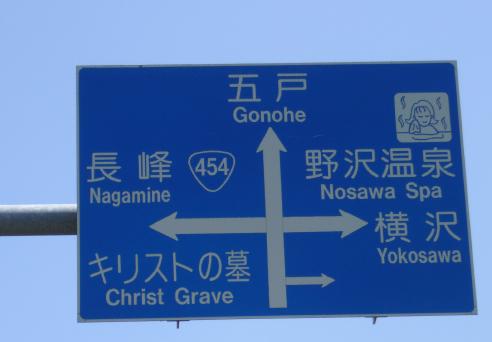
Next time you’re in Japan, make a journey to the village of Shingo at the far north of Honshu island. You’ll find a road sign marked "Christ Grave", leading to a tomb with a cross on it. Local legend has it that rather than die on the cross, Jesus fled through Russia to Japan and lived out his days in Shingo as a rice farmer with his wife Miyuko and his three daughters.
(The dead guy on the cross was apparently Jesus’ brother Isukiri, who sneaked up there when the Romans weren’t looking so that Jesus could escape.)
The Bible disagrees. As far as Christians are concerned, Jesus lived and died in Palestine roughly between 1 and 38 CE. (CE, the secular equivalent of AD, stands for Common Era. The dating of Jesus’ birth by those who accept he existed is pretty vague in its own right. Estimates by historians place it between 18BC and 1AD.)
The trouble is, there’s no proof outside of the Bible itself. The New Testament (the part of the Bible written after Christ) is an assemblage of books written at different times by different authors, and the authenticity of the ones claiming to be eyewitness testimony is suspect. Parts of the Gospels of Luke and Matthew, for example, contradict each other, while other parts appear to be copied from the Gospel of Mark. Mark, meanwhile, is suspiciously confused about Palestinian geography for a native.
Mark, incidentally, also mentions Jesus having sisters. Look it up – chapter six, verse three.
The earliest non-Biblical reference to Jesus was by Flavius Josephus, a Jewish historian born in 37CE. In his Antiquities Of The Jews, written about 93CE, he – improbably for an ultra-orthodox Pharisee – describes Jesus as being “the Christ”, or Messiah. Even The Catholic Encyclopedia acknowledges that, “The passage seems to suffer from repeated interpolations,” meaning it is very likely that the key sentences are a forgery, inserted into the text by 4th-century Christian translators.
Writing in 112CE, the Roman historian Tacitus described in his Annals Nero’s persecution of Christians 50 years earlier and mentioned their founder “Christus”. Errors in his description of Pilate imply, however, that his sources were Christians in Rome rather than offical documents. The passage itself is open to question – the radical former clergyman Robert Taylor claimed that there was no evidence for it even existing in copies of the Annals before the 15th century. More pesky forgers.
Suetonius, author of The Twelve Caesars (120CE) referred to “disturbances at the instigation of Chrestus” among Jews in Rome, though Chrestus was a common Greek name and may simply have been a local troublemaker. Aside from these three, the dozens of Greek, Roman and Jewish historians writing at the supposed time of Christ or in the century after made no reference to him whatsoever.
As Bertrand Russell wrote, “Historically, it is quite doubtful whether Christ ever existed at all, and if he did we do not know anything about him.” Even the things we think we know are dubious. Belgian historian Franz Cumont, for example, uncovered the following details about Mithras, already an enormously popular deity among Romans and other gentiles by Jesus’ time. Mithras was worshipped as “The light of the world”, he was part of a holy trinity in a cosmology that invoked heaven and hell, and he would redeem his worshippers on the Day of Judgement. His birthday festival was on 25 December, and he took part in a last supper before he died and ascended to heaven. His worshippers underwent baptism, ritually consumed bread and wine on Sundays and celebrated a rite of rebirth in late March/early April[3][4]. Quite a coincidence.
(The dead guy on the cross was apparently Jesus’ brother Isukiri, who sneaked up there when the Romans weren’t looking so that Jesus could escape.)
The Bible disagrees. As far as Christians are concerned, Jesus lived and died in Palestine roughly between 1 and 38 CE. (CE, the secular equivalent of AD, stands for Common Era. The dating of Jesus’ birth by those who accept he existed is pretty vague in its own right. Estimates by historians place it between 18BC and 1AD.)
The trouble is, there’s no proof outside of the Bible itself. The New Testament (the part of the Bible written after Christ) is an assemblage of books written at different times by different authors, and the authenticity of the ones claiming to be eyewitness testimony is suspect. Parts of the Gospels of Luke and Matthew, for example, contradict each other, while other parts appear to be copied from the Gospel of Mark. Mark, meanwhile, is suspiciously confused about Palestinian geography for a native.
Mark, incidentally, also mentions Jesus having sisters. Look it up – chapter six, verse three.
The earliest non-Biblical reference to Jesus was by Flavius Josephus, a Jewish historian born in 37CE. In his Antiquities Of The Jews, written about 93CE, he – improbably for an ultra-orthodox Pharisee – describes Jesus as being “the Christ”, or Messiah. Even The Catholic Encyclopedia acknowledges that, “The passage seems to suffer from repeated interpolations,” meaning it is very likely that the key sentences are a forgery, inserted into the text by 4th-century Christian translators.
Writing in 112CE, the Roman historian Tacitus described in his Annals Nero’s persecution of Christians 50 years earlier and mentioned their founder “Christus”. Errors in his description of Pilate imply, however, that his sources were Christians in Rome rather than offical documents. The passage itself is open to question – the radical former clergyman Robert Taylor claimed that there was no evidence for it even existing in copies of the Annals before the 15th century. More pesky forgers.
Suetonius, author of The Twelve Caesars (120CE) referred to “disturbances at the instigation of Chrestus” among Jews in Rome, though Chrestus was a common Greek name and may simply have been a local troublemaker. Aside from these three, the dozens of Greek, Roman and Jewish historians writing at the supposed time of Christ or in the century after made no reference to him whatsoever.
As Bertrand Russell wrote, “Historically, it is quite doubtful whether Christ ever existed at all, and if he did we do not know anything about him.” Even the things we think we know are dubious. Belgian historian Franz Cumont, for example, uncovered the following details about Mithras, already an enormously popular deity among Romans and other gentiles by Jesus’ time. Mithras was worshipped as “The light of the world”, he was part of a holy trinity in a cosmology that invoked heaven and hell, and he would redeem his worshippers on the Day of Judgement. His birthday festival was on 25 December, and he took part in a last supper before he died and ascended to heaven. His worshippers underwent baptism, ritually consumed bread and wine on Sundays and celebrated a rite of rebirth in late March/early April[3][4]. Quite a coincidence.
Tuesday, 19 August 2008
WRONG: You can still be executed in Britain for High Treason, Piracy and Arson in Her Majesty’s Shipyards
For some reason, this old saw is still lingering wherever pedants meet pubs.
A ridiculous number of offences have been punishable by death in Britain over the years. So many, in fact, that the statute books of the 18th century later became known as “The Bloody Code”. Alongside murder, you could be executed for treason, stealing from a shipwreck or from a rabbit warren, writing graffiti on Westminster Bridge, poaching, stealing letters, sacrilege, blacking-up your face at night (this was more a measure against robbery than minstrels), impersonating a Chelsea Pensioner (again, a measure against benefit frauds, rather than impressionists), cutting down young trees, being in the company of gypsies for a month and, remarkably, “strong evidence of malice” in 7-to-14-year-old children. According to the Lord Chief Justice, in 1801 a boy of 13 was executed for stealing a spoon.
Executions were popular public events. In 1807, 40,000 came to see the hanging of the murderers Owen Haggerty and John Holloway at the Old Bailey – so many that a sudden rush near a pie stall caused more than thirty spectators to be trampled to death. Given the circumstances, the irony may have been lost on them.
By 1861, various parliamentary reformers had managed to reduce the list of capital crimes to four: murder, high treason, arson in royal dockyards and piracy with violence. A century later, the Murder Act (Abolition Of The Death Penalty) of 1965 introduced a five-year moratorium on execution for murder that was made permanent in 1969. Outstanding death sentences were commuted, but it was too late for Gwynne Owen Evans (also known as John Welby) and Peter Allen, a pair of small-time thieves who stabbed a workmate of Evans’ to death during a robbery. They were simultaneously hanged in Manchester and Liverpool respectively, becoming the last people to be executed in Britain.
High treason ceased to be a capital crime in 1971 and the Crime And Disorder Act of 1998 put an end to the remaining two. In 1999, Jack Straw signed the 6th protocol of the European Convention On Human Rights, formally abolishing the death penalty, though the Convention does contain the proviso that any signatory state may employ it during time of war. In 2002, the penalty was abolished in the Turks and Caicos islands in the West Indies (see here for more about British overseas territories), meaning that it is now impossible to be executed for any crime on British territory anywhere in the world, no matter whose rabbit warren you’ve been caught with your hand in.
A ridiculous number of offences have been punishable by death in Britain over the years. So many, in fact, that the statute books of the 18th century later became known as “The Bloody Code”. Alongside murder, you could be executed for treason, stealing from a shipwreck or from a rabbit warren, writing graffiti on Westminster Bridge, poaching, stealing letters, sacrilege, blacking-up your face at night (this was more a measure against robbery than minstrels), impersonating a Chelsea Pensioner (again, a measure against benefit frauds, rather than impressionists), cutting down young trees, being in the company of gypsies for a month and, remarkably, “strong evidence of malice” in 7-to-14-year-old children. According to the Lord Chief Justice, in 1801 a boy of 13 was executed for stealing a spoon.
Executions were popular public events. In 1807, 40,000 came to see the hanging of the murderers Owen Haggerty and John Holloway at the Old Bailey – so many that a sudden rush near a pie stall caused more than thirty spectators to be trampled to death. Given the circumstances, the irony may have been lost on them.
By 1861, various parliamentary reformers had managed to reduce the list of capital crimes to four: murder, high treason, arson in royal dockyards and piracy with violence. A century later, the Murder Act (Abolition Of The Death Penalty) of 1965 introduced a five-year moratorium on execution for murder that was made permanent in 1969. Outstanding death sentences were commuted, but it was too late for Gwynne Owen Evans (also known as John Welby) and Peter Allen, a pair of small-time thieves who stabbed a workmate of Evans’ to death during a robbery. They were simultaneously hanged in Manchester and Liverpool respectively, becoming the last people to be executed in Britain.
High treason ceased to be a capital crime in 1971 and the Crime And Disorder Act of 1998 put an end to the remaining two. In 1999, Jack Straw signed the 6th protocol of the European Convention On Human Rights, formally abolishing the death penalty, though the Convention does contain the proviso that any signatory state may employ it during time of war. In 2002, the penalty was abolished in the Turks and Caicos islands in the West Indies (see here for more about British overseas territories), meaning that it is now impossible to be executed for any crime on British territory anywhere in the world, no matter whose rabbit warren you’ve been caught with your hand in.
Tuesday, 12 August 2008
WRONG: Inflation is a bad thing
Inflation, or the ongoing rise in prices that reduces the spending power of money, is the bane of every national treasury. For the uninitiated, it’s the mysterious tendency of the pound (or cruzeiro, or baht) in your pocket to buy you less and less each year. It’s measured against the Consumer Price Index, which tracks the cost of a literal (and big, and unlikely) shopping basket of goods. The basket for 2007 included:
•olive oil
•broccoli
•frozen pizza
•an electric fan
•a toothbrush
•chicken kievs
•a digital radio
•tracksuit bottoms
•wallpaper paste
•kiwi fruit
•nursing home fees
•motor oil
•a dvd recorder
•an acoustic guitar
•compost
•a hamster
•squash court hire
•fish and chips
•“corn-based snacks”
The following is one very simple model of inflation (the “cost push” model, if you really want to know):
1. Everyone wants higher wages.
2. As wages go up, employers pass on the cost of the raises to consumers by putting up prices.
3. If prices are up, everyone wants higher wages.
4. Go to Stage 2.
Monetarists, who are generally followers of the economist Milton Friedman, would say inflation is the result of changes to the money supply. The more money there is in circulation, the less it is worth, as the German government of the 1920s discovered when they printed so many banknotes that people found it cheaper to burn them than buy firewood. In Hungary in July 1946, prices more than tripled every day, leading to the issue of the quite remarkable 100 million trillion (100,000,000,000,000,000,000) pengo note. It was worth about 10p, and meant the smaller denomination notes had the same value – and possibly the same use – as a sheet of toilet paper. The treasury, presumably clamping their hands over their ears and shouting “La la la la la,” printed an even larger 1 billion trillion pengo note, but it was never issued. Instead, sadly, the pengo was replaced with the forint, which doesn’t sound nearly as much like an animated penguin.
A similar case is occurring in Zimbabwe today – at the time of writing, the weekly national lotto prize stands at 1.2 quadrillion dollars.
It should be noted, however, that “money” does not only mean cash. It covers spending of all kinds.
Followers of John Maynard Keynes (the fact that the names of the two most prominent 20th-century economists combine to form “Milton Keynes” is a coincidence. The Buckinghamshire new town’s name originated as a corruption of “Middleton” and a Norman landowning family called Cahaines) argue that money supply is only a small factor among the causes of inflation. Aggregate demand – a combination of government spending, public consumption, investment, and the export/import balance – is the key. Other schools of economic thought have different opinions, and so far there is no clear consensus on the exact causes of – or remedy for – inflation, though monetary controls have historically proved effective.
The unexpected conclusion that most economists have come to, however, it that inflation isn’t always a bad thing. As long as it is slow and wages are matching it, then it’s a good sign that the economy as a whole is growing, and is controllable because it is predictable. Deflation – a sustained downward trend in prices – sounds great in principle, but actually reflects an unwillingness to spend, as in the Great Depression of the 1930s.
•olive oil
•broccoli
•frozen pizza
•an electric fan
•a toothbrush
•chicken kievs
•a digital radio
•tracksuit bottoms
•wallpaper paste
•kiwi fruit
•nursing home fees
•motor oil
•a dvd recorder
•an acoustic guitar
•compost
•a hamster
•squash court hire
•fish and chips
•“corn-based snacks”
The following is one very simple model of inflation (the “cost push” model, if you really want to know):
1. Everyone wants higher wages.
2. As wages go up, employers pass on the cost of the raises to consumers by putting up prices.
3. If prices are up, everyone wants higher wages.
4. Go to Stage 2.
Monetarists, who are generally followers of the economist Milton Friedman, would say inflation is the result of changes to the money supply. The more money there is in circulation, the less it is worth, as the German government of the 1920s discovered when they printed so many banknotes that people found it cheaper to burn them than buy firewood. In Hungary in July 1946, prices more than tripled every day, leading to the issue of the quite remarkable 100 million trillion (100,000,000,000,000,000,000) pengo note. It was worth about 10p, and meant the smaller denomination notes had the same value – and possibly the same use – as a sheet of toilet paper. The treasury, presumably clamping their hands over their ears and shouting “La la la la la,” printed an even larger 1 billion trillion pengo note, but it was never issued. Instead, sadly, the pengo was replaced with the forint, which doesn’t sound nearly as much like an animated penguin.
A similar case is occurring in Zimbabwe today – at the time of writing, the weekly national lotto prize stands at 1.2 quadrillion dollars.
It should be noted, however, that “money” does not only mean cash. It covers spending of all kinds.
Followers of John Maynard Keynes (the fact that the names of the two most prominent 20th-century economists combine to form “Milton Keynes” is a coincidence. The Buckinghamshire new town’s name originated as a corruption of “Middleton” and a Norman landowning family called Cahaines) argue that money supply is only a small factor among the causes of inflation. Aggregate demand – a combination of government spending, public consumption, investment, and the export/import balance – is the key. Other schools of economic thought have different opinions, and so far there is no clear consensus on the exact causes of – or remedy for – inflation, though monetary controls have historically proved effective.
The unexpected conclusion that most economists have come to, however, it that inflation isn’t always a bad thing. As long as it is slow and wages are matching it, then it’s a good sign that the economy as a whole is growing, and is controllable because it is predictable. Deflation – a sustained downward trend in prices – sounds great in principle, but actually reflects an unwillingness to spend, as in the Great Depression of the 1930s.
Monday, 4 August 2008
WRONG: JD Wetherspoon founded a chain of pubs
The name may conjure an image of a genial 19th-century Yorkshire brewer with muttonchop sideburns and a leather apron, but that’s just what they want you to think. Like Mr Kipling, JD Wetherspoon never existed. (Sara Lee, on the other hand, did. She was the daughter of Charles Lubin, the founder of Kitchens Of Sara Lee, a frozen baked-goods company that later became simply The Sara Lee Corporation. Sara Lee Schupf went on to become a philanthropist, supporting especially the cause of women in science.)
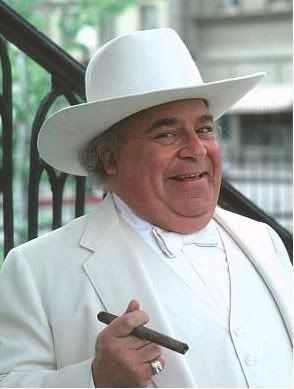
The chain was actually founded in 1979 by a 24-year-old law student called Tim Martin. The 6’6”, mullet-sporting Ulsterman took the name “Wetherspoon” from one of his teachers, while the “JD” – brilliantly – came from JD “Boss” Hogg in The Dukes Of Hazzard.
Martin supposedly modelled the chain itself on an essay by George Orwell about a fantasy pub called The Moon Under Water, which offered a quiet, drunkard-free atmosphere with friendly staff and no music. A reading of Orwell’s essay, however, demonstrates that something must have been lost in translation – he demanded beer in pewter or china mugs, open fires, liver-sausage sandwiches, strictly Victorian fittings and “motherly barmaids”.
The chain was actually founded in 1979 by a 24-year-old law student called Tim Martin. The 6’6”, mullet-sporting Ulsterman took the name “Wetherspoon” from one of his teachers, while the “JD” – brilliantly – came from JD “Boss” Hogg in The Dukes Of Hazzard.
Martin supposedly modelled the chain itself on an essay by George Orwell about a fantasy pub called The Moon Under Water, which offered a quiet, drunkard-free atmosphere with friendly staff and no music. A reading of Orwell’s essay, however, demonstrates that something must have been lost in translation – he demanded beer in pewter or china mugs, open fires, liver-sausage sandwiches, strictly Victorian fittings and “motherly barmaids”.
Monday, 28 July 2008
WRONG: Wills must be drafted by solicitors
In order to make sure your worldly goods go to the right people you do not need to write, “I, Fred Bloggs, being of sound mind and body, do hereby declare…” on a fancy piece of parchment. Technically, a scribbled note on the back of an envelope carries the same legal force as a solicitor’s document.
It is wise, however, to get a solicitor’s help anyway to prevent the will being ambiguous should someone contest it. Also, there are points of law that may change your mind about what you leave to whom. Unmarried partners, for example, are entitled to nothing at all unless it is specifically allocated in a will.
The following are the strict legal requirements for your will to be valid:
1. It must be written down, and written voluntarily.
2. You must be over 18.
3. You must be of sound mind (though there’s little point in asserting, “I am of sound mind”, because how would you know if you weren’t?)
4. It must be signed in the presence of two credible witnesses who are not themselves beneficiaries in the will. (The will will still be valid if they are, but the witnesses won't get anything.)
5. You have to sign it in the witnesses’ presence, then they have to sign it.
6. It’s worth adding the date, too, for the sake of clarity.
Even if you fulfil all the requirements, your dependents can still successfully contest the will if they feel they have been unjustly ignored. Spouses, ex-spouses (if you/they have not remarried), children, step-children or partners who depend on you financially may all claim “reasonable financial provision” under the Inheritance Act of 1975. A court will decide whether Junior has a right to your money.
Outside of those provisos, you can do what you like. In 1926, a Toronto lawyer called Charles Vance Millar decided to leave his fortune to the Toronto woman who gave birth to the greatest number of children in the ten years after his death. Four women eventually scooped $125,000 each from “The Great Stork Derby” for having nine children each. Several women had more, but, rather coldly, were disqualified because some of the children were stillborn.
In 1930, Time magazine reported the case of a Mr TM Zink of Iowa, who made an even more eccentric bequest. He left $100,000 in 1930 with the instruction that in 2005, when he expected the capital to be worth substantially more, there should be built a library in his name where women would be banned not only from using the library, but also prohibited from working as staff and even being represented as authors. He left his daughter $5 and his wife nothing at all. According to The People’s Almanac, the will was successfully contested.
Next to Mr Zink, William Shakespeare seems a positive charmer, having left to his wife “my second-best bed”.
It is wise, however, to get a solicitor’s help anyway to prevent the will being ambiguous should someone contest it. Also, there are points of law that may change your mind about what you leave to whom. Unmarried partners, for example, are entitled to nothing at all unless it is specifically allocated in a will.
The following are the strict legal requirements for your will to be valid:
1. It must be written down, and written voluntarily.
2. You must be over 18.
3. You must be of sound mind (though there’s little point in asserting, “I am of sound mind”, because how would you know if you weren’t?)
4. It must be signed in the presence of two credible witnesses who are not themselves beneficiaries in the will. (The will will still be valid if they are, but the witnesses won't get anything.)
5. You have to sign it in the witnesses’ presence, then they have to sign it.
6. It’s worth adding the date, too, for the sake of clarity.
Even if you fulfil all the requirements, your dependents can still successfully contest the will if they feel they have been unjustly ignored. Spouses, ex-spouses (if you/they have not remarried), children, step-children or partners who depend on you financially may all claim “reasonable financial provision” under the Inheritance Act of 1975. A court will decide whether Junior has a right to your money.
Outside of those provisos, you can do what you like. In 1926, a Toronto lawyer called Charles Vance Millar decided to leave his fortune to the Toronto woman who gave birth to the greatest number of children in the ten years after his death. Four women eventually scooped $125,000 each from “The Great Stork Derby” for having nine children each. Several women had more, but, rather coldly, were disqualified because some of the children were stillborn.
In 1930, Time magazine reported the case of a Mr TM Zink of Iowa, who made an even more eccentric bequest. He left $100,000 in 1930 with the instruction that in 2005, when he expected the capital to be worth substantially more, there should be built a library in his name where women would be banned not only from using the library, but also prohibited from working as staff and even being represented as authors. He left his daughter $5 and his wife nothing at all. According to The People’s Almanac, the will was successfully contested.
Next to Mr Zink, William Shakespeare seems a positive charmer, having left to his wife “my second-best bed”.
Monday, 21 July 2008
WRONG: Your vote is secret
Next time you’re engaging in the democratic process, take a look at the back of your ballot paper – you’ll find it’s marked with a unique number. On its own, that number works as a measure against the counterfeiting of ballot papers (as is the “official mark”, a perforation made by the returning officer’s clerks when they hand you the paper). The number, however, corresponds to another on the counterfoil for each paper, which would be fine if that counterfoil did not also record your electoral number.
If you haven’t fallen asleep yet, this means that – in theory – your vote could very easily be traced back to you by The Man.
Don’t panic, though, because in practice it’s not legally possible for The Man to identify your vote except in extreme circumstances. The laws governing elections are very strict, and require that ballot papers are counted face up so that no one can read the number (though this would be very hard to enforce while the papers are removed from the ballot box.) The papers – even the void ones – are then sealed in packets, as are the counterfoils, and returned to the Clerk Of The Crown, who stores them for a year before destroying them. Any deviation from these rules could result in six months in prison for the offending official.
Only the Speaker of the House Of Commons, the High Court or Crown Court can order the opening of the packets, and even then only if they already know that a vote has been fraudulently cast and that the result of the election may be in doubt. The vote-tracing procedure has not been employed in a Parliamentary election since 1911.
In 1998, a Home Affairs Select Committee recommended that the numbering system be abandoned, but its findings have not been adopted by the Electoral Commission.
Incidentally, since 1885 the office of Clerk Of The Crown In Chancery has been held by the Permanent Secretary to the Lord Chancellor. Another of his duties is to use the unique silver matrix of the Queen to affix the Great Seal Of The Realm. Every document of state comes complete with one of these plastic (formerly wax) medallions embossed with the Queen’s mark and tied on with string. Elevations to the peerage are dark green, actions relating to the Royal family are blue, and the appointment of bishops is red.
If you haven’t fallen asleep yet, this means that – in theory – your vote could very easily be traced back to you by The Man.
Don’t panic, though, because in practice it’s not legally possible for The Man to identify your vote except in extreme circumstances. The laws governing elections are very strict, and require that ballot papers are counted face up so that no one can read the number (though this would be very hard to enforce while the papers are removed from the ballot box.) The papers – even the void ones – are then sealed in packets, as are the counterfoils, and returned to the Clerk Of The Crown, who stores them for a year before destroying them. Any deviation from these rules could result in six months in prison for the offending official.
Only the Speaker of the House Of Commons, the High Court or Crown Court can order the opening of the packets, and even then only if they already know that a vote has been fraudulently cast and that the result of the election may be in doubt. The vote-tracing procedure has not been employed in a Parliamentary election since 1911.
In 1998, a Home Affairs Select Committee recommended that the numbering system be abandoned, but its findings have not been adopted by the Electoral Commission.
Incidentally, since 1885 the office of Clerk Of The Crown In Chancery has been held by the Permanent Secretary to the Lord Chancellor. Another of his duties is to use the unique silver matrix of the Queen to affix the Great Seal Of The Realm. Every document of state comes complete with one of these plastic (formerly wax) medallions embossed with the Queen’s mark and tied on with string. Elevations to the peerage are dark green, actions relating to the Royal family are blue, and the appointment of bishops is red.
Friday, 11 July 2008
WRONG: Mars is red
While Mars certainly isn’t green or blue, it’s no redder than, say, the Australian outback. Both are a drab, rusty brown, and Mars' sky is a butterscotch-yellow. After powerful dust storms, iron-rich particles form a yellow-brown haze. This dust absorbs light of shorter wavelengths (the blues), and scatters the yellows and reds around the sky. You can see a similar effect in any smog-laden city, or at sunset. (ie The red sky at night so popular with shepherds.)
There is nevertheless controversy over what precise colour the Martian sky is. NASA was recently accused of “tweaking” the colour of their pictures to fit with people’s expectations. Their first pictures, from back in 1977, were certainly doctored to appear blue, but only because the the scientists were unprepared for presenting their material to the press. “Several days after the first release,” said Imaging Team Leader Tim Mutch, “we distributed a second version, this time with the sky reddish. We smiled painfully when reporters asked us if the sky would turn green in a subsequent version.”
One point of interest is that Mars’ sunrise and sunset are actually blue. While the dust particles scatter away all wavelengths, their particular size relative to the angle through which the light is travelling close to the horizon causes blue light to be directed along the line from the sun to the dust particle (to the viewer), causing a blue haze.
Even stranger, Blur's bass player Alex James is a keen astronomer and was one of the first non-academics to get involved in the Beagle Mars lander project, having asked his accountant to find a way for him to go to Mars. His accountant put him in touch with Professor Colin Pillinger, who was then trying to drum up support for his proposed project.
There is nevertheless controversy over what precise colour the Martian sky is. NASA was recently accused of “tweaking” the colour of their pictures to fit with people’s expectations. Their first pictures, from back in 1977, were certainly doctored to appear blue, but only because the the scientists were unprepared for presenting their material to the press. “Several days after the first release,” said Imaging Team Leader Tim Mutch, “we distributed a second version, this time with the sky reddish. We smiled painfully when reporters asked us if the sky would turn green in a subsequent version.”
One point of interest is that Mars’ sunrise and sunset are actually blue. While the dust particles scatter away all wavelengths, their particular size relative to the angle through which the light is travelling close to the horizon causes blue light to be directed along the line from the sun to the dust particle (to the viewer), causing a blue haze.
Even stranger, Blur's bass player Alex James is a keen astronomer and was one of the first non-academics to get involved in the Beagle Mars lander project, having asked his accountant to find a way for him to go to Mars. His accountant put him in touch with Professor Colin Pillinger, who was then trying to drum up support for his proposed project.
Thursday, 3 July 2008
WRONG: The Government runs the Stock Exchange
The first ever modern share was issued by the Dutch East India Trading Company, a collection of spice merchants who banded together in 1602 to compete against the Spanish and Portuguese. The investors were mainly middle-class tradespeople like bakers, coopers and barber-surgeons (including, wonderfully, one Agneta Cock). Rather than receive their annual share of the company’s profits – the “dividend” – in cash, Mrs Cock and her fellow investors were paid in pepper, mace and nutmeg.
Modern shares are essentially subject to the same rules as those governing La Cock’s pioneering transaction: in return for your investment, you claim a dividend, and you can sell the share whenever you like for however much anyone is willing to pay.
The London Stock exchange is a public limited company (in other words, you can buy shares in it, and its accounts are published). In 1698, a rowdy group of traders (plus ça change) was expelled from the Royal Exchange market, crossed the road and started dealing in Jonathan’s Coffee House, Change Alley. It was 75 years before they thought to build their own offices (even though Jonathan’s burned down in 1748), but they did, and prospered as a private company. Amazingly, it was a further 200 years (1973) before female traders were allowed to join the boys’ club. Its private investors voted in 2000 for it to become a public limited company, and if you fancy it, you can look up a stockbroker in the Yellow Pages today and buy some of their shares. Don’t let them pay you off in nutmeg.
Modern shares are essentially subject to the same rules as those governing La Cock’s pioneering transaction: in return for your investment, you claim a dividend, and you can sell the share whenever you like for however much anyone is willing to pay.
The London Stock exchange is a public limited company (in other words, you can buy shares in it, and its accounts are published). In 1698, a rowdy group of traders (plus ça change) was expelled from the Royal Exchange market, crossed the road and started dealing in Jonathan’s Coffee House, Change Alley. It was 75 years before they thought to build their own offices (even though Jonathan’s burned down in 1748), but they did, and prospered as a private company. Amazingly, it was a further 200 years (1973) before female traders were allowed to join the boys’ club. Its private investors voted in 2000 for it to become a public limited company, and if you fancy it, you can look up a stockbroker in the Yellow Pages today and buy some of their shares. Don’t let them pay you off in nutmeg.
Friday, 27 June 2008
WRONG: Germany surrendered to the Allies on May 7 1945
On 5 May 1945, a delegation of German military bigwigs flew to Brussels, had a spot of lunch, then continued by car to an old red schoolhouse in Rheims, France, that served as General Eisenhower’s headquarters. The intention was to surrender to the Allies.
Unfortunately, the officers, led by Admiral von Friedeburg, had not been given authority to sign by their superiors, so surrender was delayed while they sent a message – via British Army messengers – to the remains of the German government to get further instructions. (German High Command wanted to avoid having to surrender to the Soviets as well as the Western Allies, but Eisenhower demanded unconditional surrender.) General Gustav Jodl arrived the following day, but forced more delays until finally signing at 2.41am on 7 May. The ceasefire became effective at 11.01pm the following day.
And that would seem to be that – unless you want to be pedantic, which we do. First, there had been earlier surrenders. Himmler had proposed a conditional surrender in April, but Eisenhower replied that he wasn’t interested. Von Friedeburg had also signed a conditional surrender on behalf of the government on 4 May in front of Field-Marshal Montgomery, though it was later superseded by the unconditional one.
Then there were the Soviets to consider – Germany didn’t officially surrender to them until 9 May.
Yet all of this overlooks a point of order. While Admiral Doenitz, the German President (Hitler appointed him before his suicide, believing the Navy was the only branch of the military not to have betrayed him) had given his assent, it was only the military who had surrendered. Doenitz’s government, based in Flensburg, had not. So while the armed forces had surrendered, civilian Germany was still, in a sense, at war.
The Allies got around this by simply ignoring the Flensburg government. One term of the 7 May surrender was that “This act of military surrender,” (note the “military”) “…will be superseded by any general instrument of surrender imposed by, or on behalf of the United Nations and applicable to Germany and the German armed forces as a whole.” The Allies arrested the Flensburg government on 23 May, thereby dissolving the immediate problem, and subsequently created a new Allied Control Council, the power-sharing agreement between the Soviet Union, France, the UK and the USA. The Council’s Declaration Regarding The Defeat Of Germany And The Assumption Of Supreme Authority By Allied Powers signed on June 5 effectively eliminated the German government and cemented the surrender in law.
Unfortunately, the officers, led by Admiral von Friedeburg, had not been given authority to sign by their superiors, so surrender was delayed while they sent a message – via British Army messengers – to the remains of the German government to get further instructions. (German High Command wanted to avoid having to surrender to the Soviets as well as the Western Allies, but Eisenhower demanded unconditional surrender.) General Gustav Jodl arrived the following day, but forced more delays until finally signing at 2.41am on 7 May. The ceasefire became effective at 11.01pm the following day.
And that would seem to be that – unless you want to be pedantic, which we do. First, there had been earlier surrenders. Himmler had proposed a conditional surrender in April, but Eisenhower replied that he wasn’t interested. Von Friedeburg had also signed a conditional surrender on behalf of the government on 4 May in front of Field-Marshal Montgomery, though it was later superseded by the unconditional one.
Then there were the Soviets to consider – Germany didn’t officially surrender to them until 9 May.
Yet all of this overlooks a point of order. While Admiral Doenitz, the German President (Hitler appointed him before his suicide, believing the Navy was the only branch of the military not to have betrayed him) had given his assent, it was only the military who had surrendered. Doenitz’s government, based in Flensburg, had not. So while the armed forces had surrendered, civilian Germany was still, in a sense, at war.
The Allies got around this by simply ignoring the Flensburg government. One term of the 7 May surrender was that “This act of military surrender,” (note the “military”) “…will be superseded by any general instrument of surrender imposed by, or on behalf of the United Nations and applicable to Germany and the German armed forces as a whole.” The Allies arrested the Flensburg government on 23 May, thereby dissolving the immediate problem, and subsequently created a new Allied Control Council, the power-sharing agreement between the Soviet Union, France, the UK and the USA. The Council’s Declaration Regarding The Defeat Of Germany And The Assumption Of Supreme Authority By Allied Powers signed on June 5 effectively eliminated the German government and cemented the surrender in law.
Subscribe to:
Posts (Atom)